
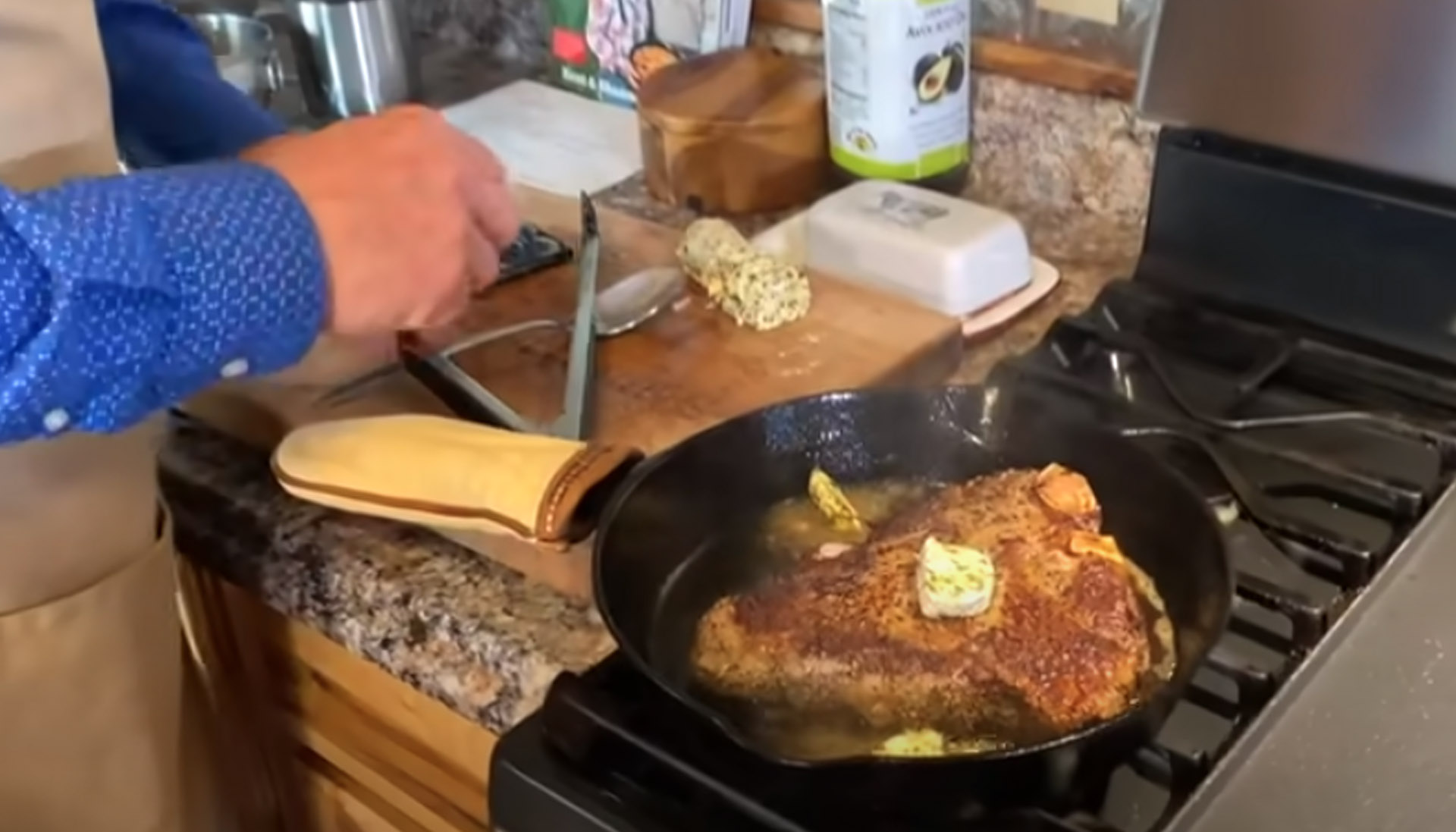
Herb butter for steak is softened butter mixed with fresh herbs, usually rosemary, thyme, and parsley, then melted over a hot cut of meat so the fat carries the flavor into every bite. It's not a garnish. It's the difference between a steak that's seasoned and a steak that's finished. Do it right on a Porterhouse and you get two cuts, one board, and a reason to fight your dinner guest for the last bite of filet.
This is the version we make at home: fresh herbs, a hit of dried ancho chili for smoke instead of heat, a cast iron skillet doing the heavy lifting, and the patience to let the steak rest before you cut it. None of it is complicated. All of it matters.
What Herb Butter Actually Does for a Steak
Butter alone gives you richness. Herbs alone give you aroma. Put them together and softened into a stick, and you get something that melts into the crust of a hot steak and carries both into the meat instead of sitting on top of it looking pretty. That's the whole job of compound butter for steak: it's a flavor delivery system, not decoration.
The mistake most people make is using dried herbs straight from the pantry. Skip that. Dried herbs bring dust, not brightness. Fresh rosemary, thyme, and parsley bring oil in the leaf itself, and that oil is what blooms when it hits hot fat. If the herb smells sharp and green when you rub it between your fingers at the store, it'll do its job on the steak.
This post may contain affiliate links which means Pints, Forks & Friends may receive commission for purchases made through links. We only recommend products that we personally believe in and use. Learn more on our Privacy Policy page.

Comfort Food The Cowboy Way
French Toast Casserole
Fried Macaroni and Cheese
Red Eye Gravy and Ham
Grilled Steak and Chicken Quesadillas
Hearty Beef Stew
Smoked Queso Dip
The Ancho Chili Move
Dried ancho chili is the one ingredient in this recipe that isn't obvious, and it's the one doing the most work. A half teaspoon of finely crushed ancho per stick of butter adds smoke and a low, rounded warmth without turning the dish spicy. It's not there to compete with the herbs. It's there to give them something to stand on.
Grind or finely chop the dried chili until it's closer to powder than flake, then fold it into the softened butter along with the garlic and herbs. Too much and it'll fight the steak. A half teaspoon per stick is the right amount.
Why Porterhouse
A Porterhouse gets you two steaks in one cut: a New York strip on the larger side, a filet mignon on the smaller side, separated by a T-bone. For a cut to legally carry the Porterhouse name, the filet portion has to measure at least 1.25 inches across at its widest point. Anything thinner is a T-bone, which is a fine steak but a different cut.
The upside of a Porterhouse is variety on one plate. The strip brings the beefy, chewy bite people associate with steak night. The filet brings the buttery tenderness that makes people close their eyes mid-bite. Herb butter works on both, but it's the filet side where it really shows off, since that cut has the least fat of its own to carry flavor.
Cast Iron Does the Real Work
A nonstick pan will cook your steak. A well-seasoned cast iron skillet will make it taste like it came out of a steakhouse kitchen. The difference is heat retention: cast iron holds a high, even temperature that produces the deep, dark crust a thinner pan can't hold onto long enough to build.
Before you cook, make sure the skillet is properly seasoned. After cooking, let it cool, wash it gently with water and a light touch of soap if you need it, dry it completely, then rub it with a thin coat of oil and heat it until it just starts to smoke. That last step re-seasons the surface and keeps rust off. Skip it enough times and you'll be scrubbing rust instead of searing steak.
Sear, Baste, Rest
Heat the skillet over medium-high with a mix of butter and a high-smoke-point oil like avocado oil. Sear the steak about four minutes per side. In the final two minutes on each side, add a spoonful of the herb butter to the pan and start basting, tilting the skillet and spooning the melted butter over the top of the steak as it finishes cooking.
Once it comes off the heat, let it rest for about half its cook time before you cut it. This isn't optional. Cutting into a hot steak sends the juices straight onto the cutting board instead of staying in the meat, and you end up with a drier bite than the sear deserved. For the science behind why, Serious Eats breaks down the resting process in detail. Let it rest, then slice.
The Second Act: Mushrooms in the Leftover Butter
Don't let that herb butter go to waste once the steak is plated. Drop sliced cremini or shiitake mushrooms into the same skillet over medium heat and let them pick up everything left behind, the browned bits, the herb oil, the residual ancho smoke. Bon Appétit has a solid rundown on picking the right mushroom variety if cremini and shiitake aren't in your market that day. A splash of white wine at the end adds acidity that cuts through all that richness. Five minutes and you've got a side dish that tastes like it was planned, not improvised.
What to Drink and What to Serve Alongside
A Porterhouse finished in herb butter wants a beer with enough body to stand next to it, not get lost behind it. A stout or porter, something like Founders KBS or Deschutes Black Butte Porter, has the weight to match the richness of the meat and the butter without fighting either one. Lighter beers tend to disappear next to a dish this rich. Looking for more pairings? Browse our craft beer coverage for brewery spotlights and style breakdowns.
On the plate, grilled asparagus with olive oil and sea salt gives you something green and a little smoky. Mashed sweet potatoes with cinnamon and nutmeg do the opposite job, offering a soft, warm counterpoint to all that seared richness. Neither is complicated. Both earn their spot on the plate.
Herb Butter Variations Worth Trying
Once you've got the base technique down, the herb combination is yours to play with. Basil and oregano push the flavor toward an Italian direction. Tarragon and chervil lean French. The formula stays the same: fresh herbs, softened butter, a small amount of something with backbone like the ancho chili, mixed and chilled into a log you can slice off as needed.
If you want to go further, The Original Cowboy Butter walks through a different direction entirely, built around garlic, lemon, dijon, and Worcestershire instead of straight herbs.
Herb Butter Recipe for Porterhouse Steak
Adapted from Cowboy Kent Rollins
Prep Time: 3 hours (mostly resting) | Total Time: 3 hours 15 minutes | Serves: 2
Ingredients
- 1 Porterhouse steak (28 ounces)
- Lime juice, for rubbing
- Your preferred seasoning blend or Red River Ranch Original Seasoning
- 2 tablespoons coarse ground black pepper
- 1 stick plus 1 tablespoon unsalted butter, softened, divided
- 2 cloves garlic, minced
- 1 sprig fresh rosemary, finely chopped
- 1 tablespoon fresh thyme, finely chopped
- 1 tablespoon green onion, finely chopped
- 1/2 tablespoon dried ancho chili, finely crushed
- 2 tablespoons avocado oil
- 1 pound sliced mushrooms (optional)
Instructions
- Rub both sides of the steak with lime juice and your seasoning blend. Press the coarse pepper onto the outer edges, then refrigerate for 1 hour.
- Let the steak come to room temperature, roughly 2 hours, so it cooks evenly.
- While it warms, mix the softened stick of butter with the garlic, rosemary, thyme, green onion, and crushed ancho chili in a bowl.
- Spoon the herb butter onto plastic wrap, shape it into a log, wrap it tightly, and refrigerate for 1 hour.
- Heat a cast iron skillet over medium-high with the remaining tablespoon of butter and the avocado oil. Sear the steak 4 minutes per side.
- In the final 2 minutes on each side, add 2 tablespoons of the chilled herb butter to the skillet, plus another tablespoon directly on the steak, and baste continuously.
- Remove the steak and let it rest for 5 minutes before slicing.
- Lower the heat to medium and add the mushrooms to the remaining butter in the skillet. Cook until tender, about 4 minutes, adding more herb butter if you'd like.
- Serve the steak hot, topped with the sautéed mushrooms.
FAQ: Herb Butter for Steak
How do you make herb butter for steak?
Mix softened butter with finely chopped fresh herbs (rosemary, thyme, and parsley are the standard) plus minced garlic, then chill it into a log. Spoon it over the steak in the last few minutes of cooking so it melts into the crust instead of sitting on top of a finished piece of meat.
How long does herb butter last?
Herb butter keeps about two weeks in the refrigerator and up to six months in the freezer if wrapped tightly. Slicing it into a log before freezing makes it easy to portion out one round at a time.
What is compound butter for steak?
Compound butter is any softened butter mixed with additional ingredients, herbs, garlic, citrus, spices, and shaped into a log for slicing. Herb butter is one version of it. It's used to finish steak, vegetables, or bread with a flavor and richness plain butter can't deliver on its own.
What is cowboy butter made of?
Cowboy butter blends garlic, lemon juice, dijon mustard, Worcestershire sauce, and a mix of spices and herbs into a butter with more tang and kick than a straight herb butter. Read the full breakdown in The Original Cowboy Butter.
Can herb butter go on anything besides steak?
Yes. The same base works on roasted salmon, turkey, grilled vegetables, or a warm loaf of bread. Adjust the herbs to the protein, lighter herbs like dill or chives for fish, heartier ones like rosemary and sage for turkey or roasted vegetables.
How do you infuse butter with fresh herbs?
Finely chop the herbs so their oils release fully, then work them into fully softened butter with a fork or spatula until evenly distributed. For a stronger infusion, let the mixed butter rest in the fridge for at least an hour before using so the flavors have time to move through the fat.
The Bottom Line
Herb butter turns a good steak into the one people bring up months later. It costs a few extra minutes, a stick of butter, and whatever fresh herbs are sitting in your fridge or garden. The Porterhouse just gives it the biggest stage to work on.
If you're the type who wants the next wing venue, the next brewery spotlight, or the next event where a plate like this one might show up on a shared table, that's exactly what The Pub Ring is built for. Join free and you'll get first word on socials, brewery features, and the recipes we're testing before they hit the site: Join The Pub Ring.
Looking for more in the kitchen? Check out our full Forks recipe archive, or browse our Amazon shop for the gear mentioned above.
More to come. -Mike
The Latest...

Ohio Brought Lager to an IPA Fight: The 2026 GABF Winners
The Great American Beer Festival moved outdoors this year,...

Ohio Brewery Events This October: Cider in Geneva, Rye in Dayton and Fresh Hops in Chagrin Falls
October in Ohio does something to a beer drinker. The air...

Meet Hops: Our AI Sommelier for Beer, BBQ and Wings
Hops is the Pints, Forks & Friends AI sommelier. He lives...