
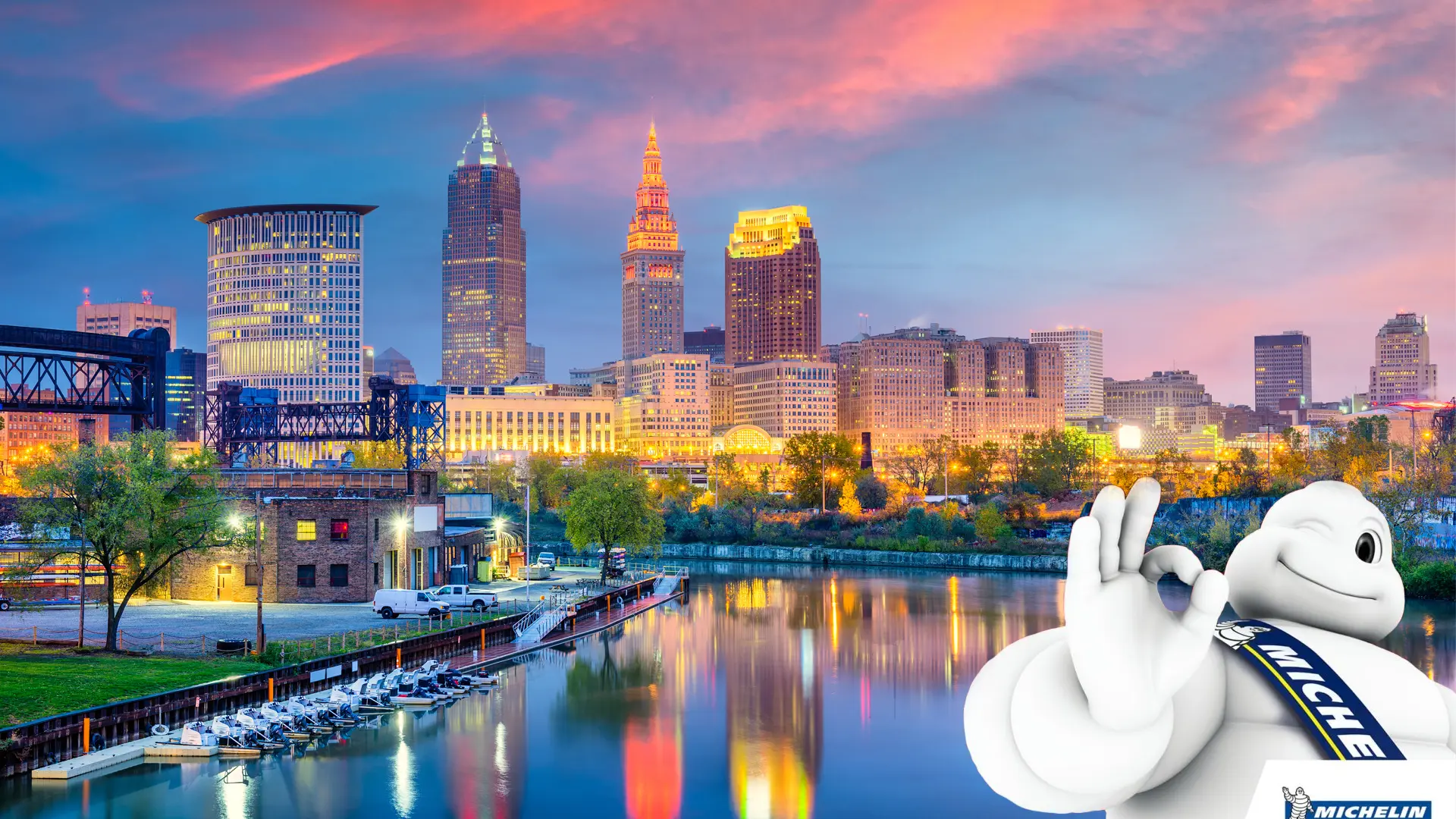
The Michelin Guide does not show up for cities that are still figuring themselves out. It shows up when the work has already been done — quietly, consistently, plate after plate, year after year — and someone in a dark corner booth finally noticed.
On April 8, 2026, Destination Cleveland announced that the city will be included in the inaugural MICHELIN Guide American Great Lakes edition, joining Detroit, Indianapolis, Milwaukee, Minneapolis, and Pittsburgh. Anonymous inspectors are already in the field. The first selections will be revealed at a ceremony in 2027.
That is not a rumor. That is the tire company that built its entire reputation on telling serious eaters where to go — and they are now telling the world: go to Cleveland.
Amazon
Michelin Guides: Check out the Global Results of all the Michelin Winners
What the Michelin Guide Actually Means (And What It Doesn't)
Let's be straight about something. A Michelin star does not make a restaurant great. It confirms what the regulars already knew. The people eating at these places on a random Tuesday in February — when there is no announcement to celebrate and no camera to perform for — they already figured it out.
What the star does is open a door for the rest of the world.
"I'm excited because I think that people from across the world are going to use that guide," said Doug Katz, one of Cleveland's most respected chef-owners. "This is another opportunity to grow Cleveland and to grow our scene."
Katz, who built his name at Fire Food and Drink over two decades and now runs Zhug, Amba, and Provenance at the Cleveland Museum of Art, represents exactly the kind of chef who has been building something real here without waiting for permission. The Michelin announcement is not the beginning of that story. It is the validation of a long chapter that already existed.
Gwendal Poullennec, International Director of the Michelin Guide, put it plainly: inspectors are looking for places showing a "willingness to go to the next level." Cleveland, if you have been paying attention, has been at that next level for a while now.
The Restaurants That Built This Moment
Any honest conversation about Cleveland's Michelin candidacy has to start in Tremont.
Dante, the eponymous restaurant from Chef Dante Boccuzzi on Professor Avenue, is the most obvious place to begin. Boccuzzi earned a Michelin star as executive chef at Aureole in New York City — a two-time James Beard Foundation Rising Star nominee who has cooked in kitchens in Italy, France, England, China, and Taiwan, and who once worked directly alongside Nobu Matsuhisa in Milan. He came home to Cleveland and built something here instead of staying where the recognition was easier.
His flagship offers both an a la carte menu and a multi-course chef's tasting menu, with modern American cuisine that carries the fingerprints of every city where he trained. The sushi restaurant Ginko, tucked beneath Dante, is its own argument entirely — traditional and modern Japanese technique shaped by Boccuzzi's years with Nobu. Both restaurants have the kind of focused intentionality that inspectors are trained to detect.
Then there is the Marble Room Steaks and Raw Bar, and if you have never walked through those doors, you need to understand what you are in for. The building itself is a former bank — the old Guardian Savings and Trust, dating to 1914 — and much of the original architecture has been preserved: marble columns, chandeliers, a gilded ceiling, the converted vault repurposed for private dining. The Marble Room opened as a restaurant in 2017, and it has been making a case for Cleveland fine dining ever since.
The menu moves between A5 Miyazaki Wagyu, rack of lamb with eggplant caponata, caviar service, fresh oysters, and sushi — the kind of range that tells you this is not a steakhouse trying to be something it is not. It is a serious restaurant that happens to serve exceptional steak. Bookings run weeks out. The service is the kind that notices what you need before you ask for it.
Chef Rocco Whalen at Fahrenheit represents a different kind of serious. His New American cuisine with Asian influences has been a fixture in Tremont for over fifteen years, and his move to a larger space at Public Square expanded the reach without diluting the focus. The wagyu short rib with teriyaki lo mein and roasted wild mushrooms is the kind of dish that sounds like a menu item until you eat it, and then it sounds like a reason to drive to Cleveland.
Pier W in Lakewood earns its place in this conversation on sheer longevity and precision. Since 1965, they have been sourcing seafood directly from local fishermen and meat from independent regional farmers — a farm-to-table philosophy that existed before anyone called it that. The views over Lake Erie toward the Cleveland skyline add context without doing the work for you. The food earns its own attention.
For Italian, Il Venetian inside Key Tower makes a credible case. The chandeliers were imported from Venice. The pastas are made daily. The wine list runs to over two hundred selections. It is the kind of room where the architecture and the cooking are in genuine conversation with each other.
And Doug Katz's Zhug in Cleveland Heights deserves specific mention. The eastern Mediterranean menu reflects Katz's philosophy of building relationships with local farmers and letting those ingredients lead — the kind of restrained, purposeful cooking that Michelin inspectors tend to reward more than flash.
The Bigger Story: What This Means for a City
Here is the thing about Michelin expanding to the Great Lakes. It is not charity. Michelin does not go where there is nothing to find.
The announcement on April 8 was made at a press conference with tourism boards from all six cities, and the contract runs through 2029. This is a sustained commitment, not a one-time acknowledgment. Anonymous inspectors are already making reservations. They are sitting at these tables right now and nobody knows which table.
David Gilbert, President and CEO of Destination Cleveland, called it "an exciting opportunity that showcases the quality, creativity and authenticity of our culinary community." Emily Lauer, the organization's Vice President of Communications, framed it this way: "Food is a cornerstone of the visitor experience in Cleveland. It reflects our region's diversity, creativity and character."
What tends to happen after a city enters the guide is worth noting. Restaurants that earn stars or even a Bib Gourmand designation — Michelin's recognition for quality at a more accessible price point — begin drawing visitors who came specifically for the food. The city becomes a culinary destination, not just a sports destination or a music destination, but a place you fly into because you want to eat.
Cleveland has neighborhoods full of independent restaurants run by people who trained at serious institutions and chose to come home rather than seek recognition elsewhere. That is a pattern this city knows well — the return of the native, someone who could have stayed in New York or San Francisco and instead brought the skills back. Boccuzzi. Katz. Whalen. The list is long.
Who Gets the First Star?
Dante Boccuzzi is the only chef in Cleveland who has held a Michelin star before — at Aureole in 2006. His restaurant DANTE in Tremont operates at the level of focused precision that the guide looks for: seasonal, personal, technically demanding, with a tasting menu option that demonstrates a clear point of view.
But Michelin does not simply reward the most decorated resume. It rewards the meal that a stranger walked in off the street and found exceptional. It rewards consistency: the same standards on a Tuesday in November that you deliver on a Saturday in December. It rewards a sense of place — cooking that could not have come from anywhere else.
By that measure, the Marble Room's mastery of its own category, Pier W's decades of disciplined sourcing, Fahrenheit's sustained creative vision, and Zhug's quiet commitment to ingredient-driven cooking all have legitimate arguments.
The honest answer is: we do not know yet. Neither do the inspectors, not finally. They are still sitting at these tables.
Come Eat Before the World Finds Out
The window before the 2027 announcement is, in a strange way, the best time to be eating in Cleveland. The restaurants are operating at full ambition. The word is out that inspectors are in the room. And the general public has not yet descended because there is no star on the door yet.
This is the moment to get a reservation at Dante. To sit at the raw bar at the Marble Room. To find a seat at Fahrenheit on a weekday and eat without the occasion feeling like a performance.
The Pints, Forks & Friends community has always known that the best dining experiences happen when you show up curious, unpretentious, and willing to let the kitchen show you something. Cleveland's chefs have been waiting for an audience that understands that. As it turns out, the Michelin Guide has been watching too.
STOP SCROLLING FOR WHERE TO GO. WE'LL TELL YOU.
The Pub Ring gets you into the bars and kitchens actually worth your time, plus a stamp card that turns showing up into something you get rewarded for. Join Free.

The Latest...
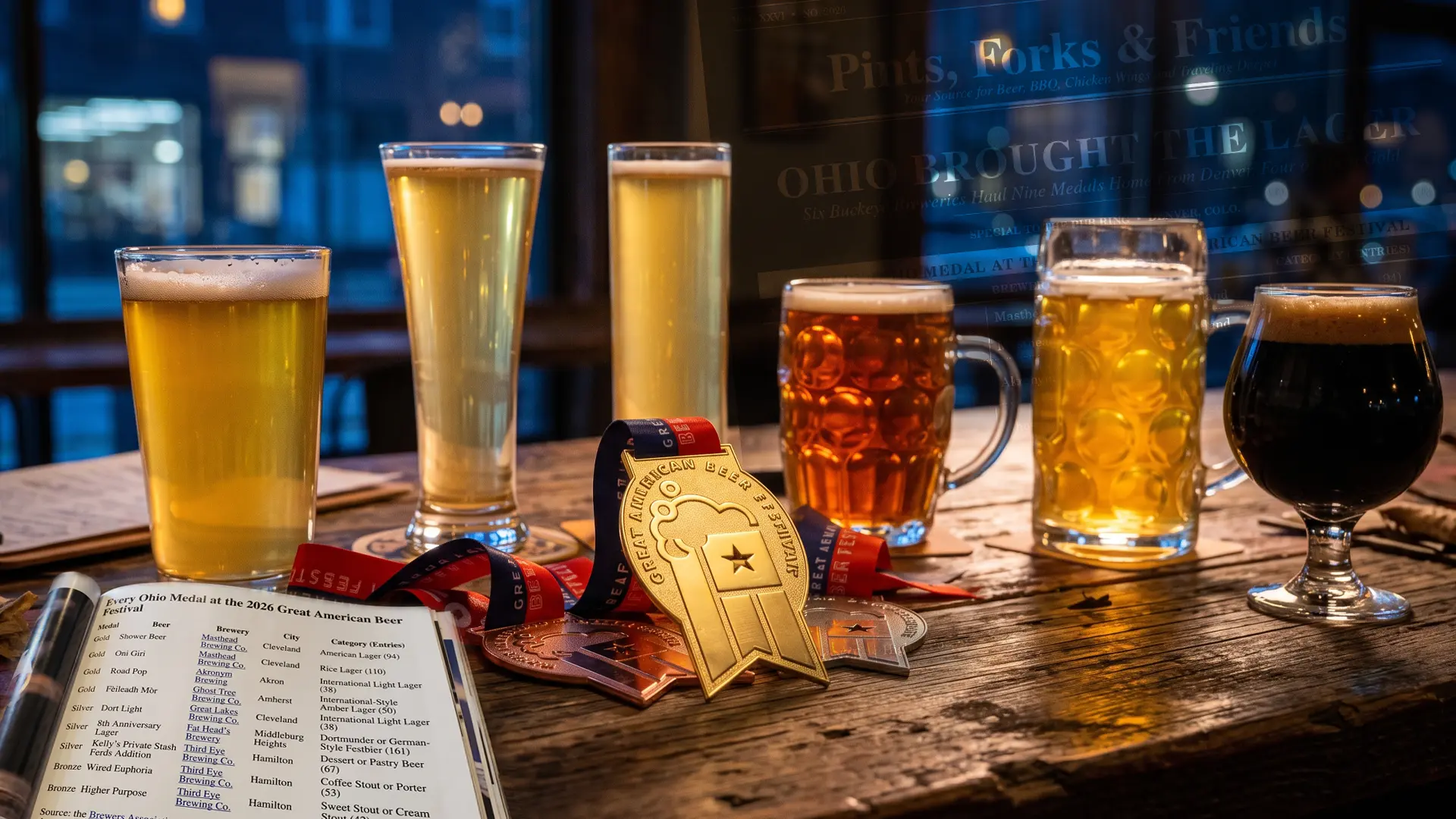
Ohio Brought Lager to an IPA Fight: The 2026 GABF Winners
The Great American Beer Festival moved outdoors this year,...
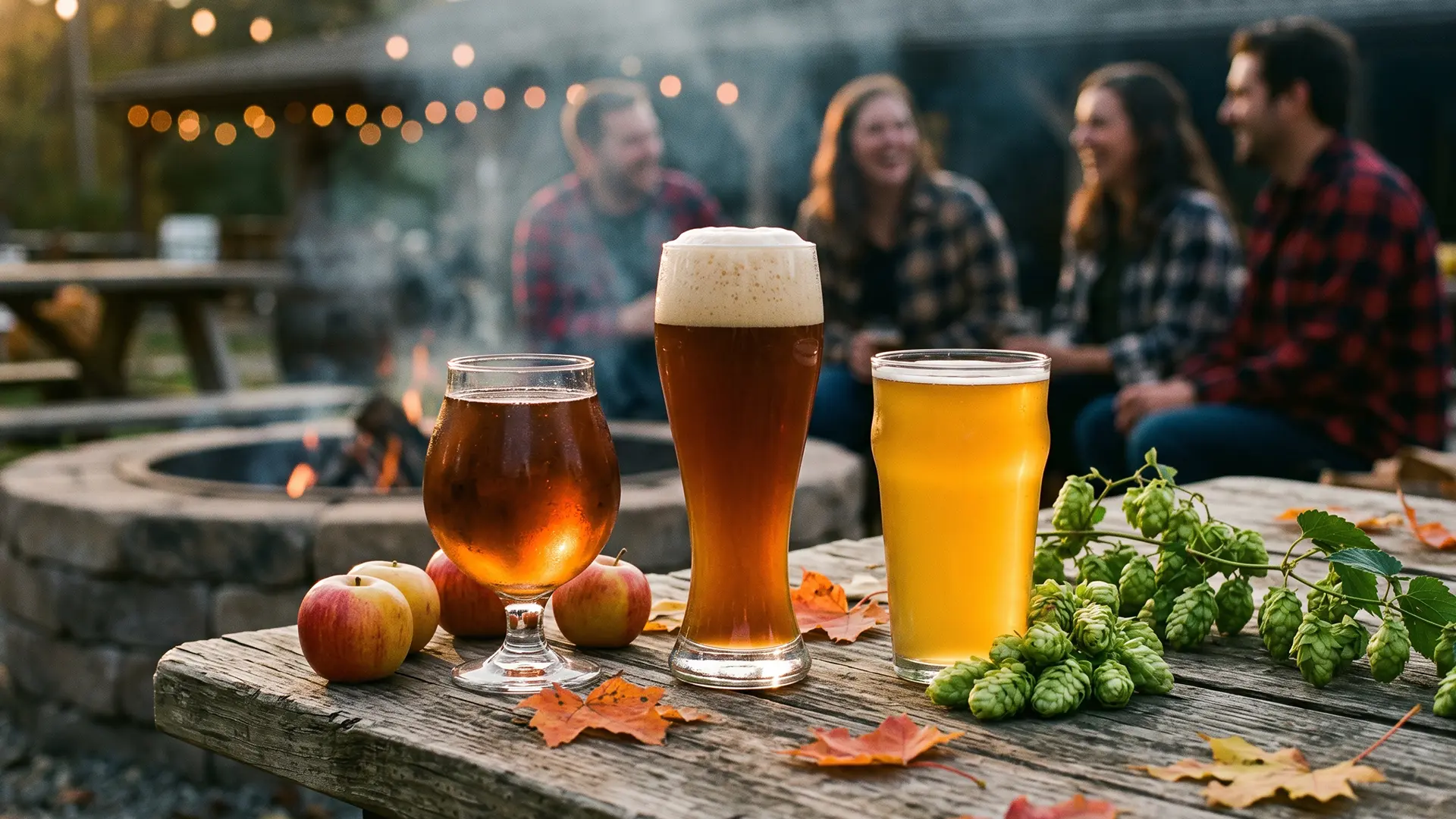
Ohio Brewery Events This October: Cider in Geneva, Rye in Dayton and Fresh Hops in Chagrin Falls
October in Ohio does something to a beer drinker. The air...

Meet Hops: Our AI Sommelier for Beer, BBQ and Wings
Hops is the Pints, Forks & Friends AI sommelier. He lives...