
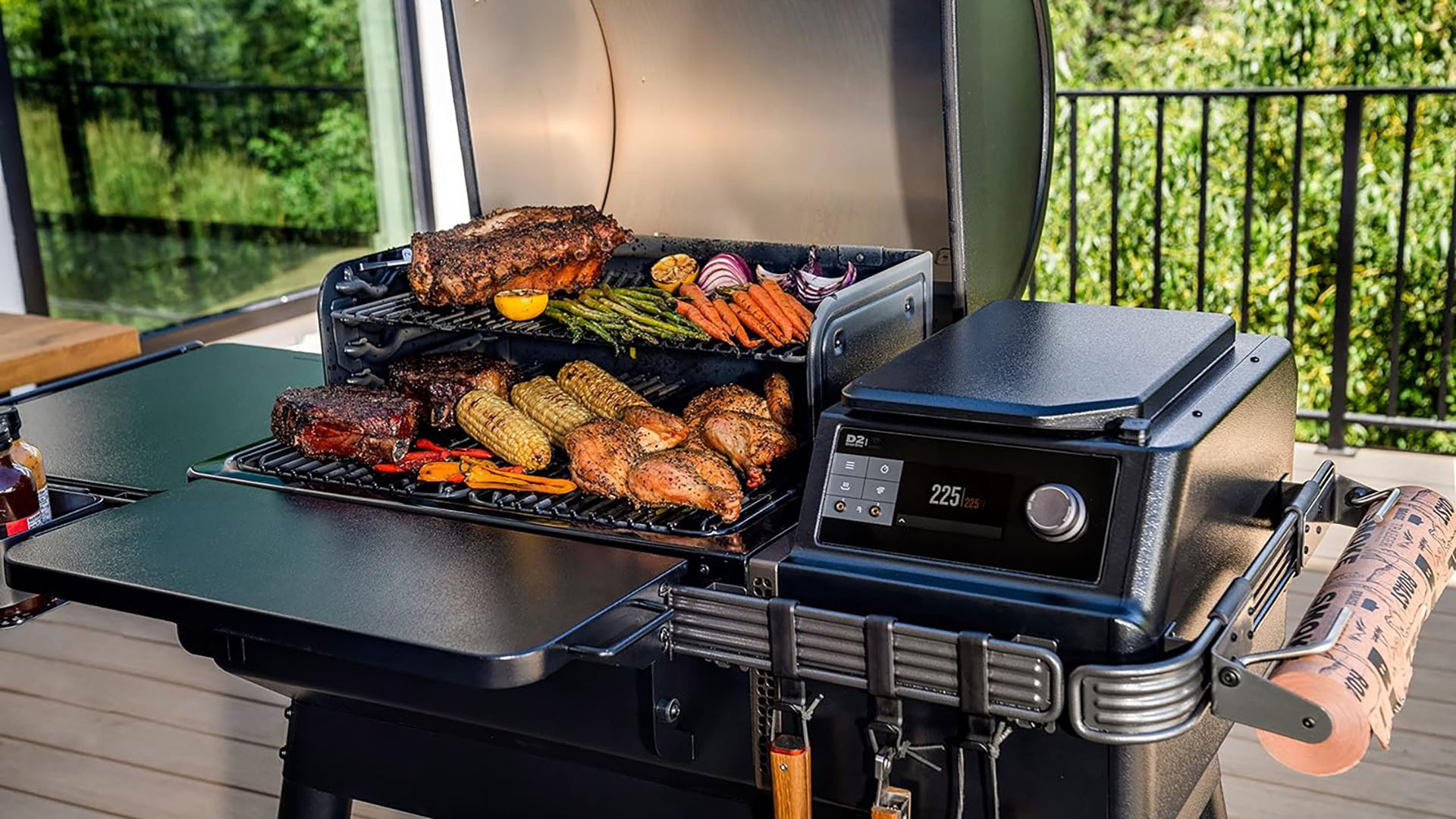
The first time someone opens a bag of wood pellets for a grill, they usually look down at them for a moment and think: these are going into my food?
It's a fair instinct. Pellets look industrial. They look like the things you pour into a wood stove, not something you'd use to cook a brisket for twelve hours. And if you went to the hardware store and grabbed the wrong bag, your instinct would be correct — heating pellets have no business anywhere near your grill. More on that in a minute.
The pellet grill — and Traeger specifically, since they essentially invented the category — is one of those rare pieces of outdoor cooking equipment that genuinely delivers on its promise. It runs at a consistent temperature for as long as you need it to, it produces real wood smoke flavor without demanding constant attention, and it lets you walk away from a twelve-pound brisket without the low-grade anxiety that comes with tending a charcoal fire. For the kind of low-and-slow smoking that produces genuinely great results, there is no easier tool to use.
But "easy" doesn't mean thoughtless. What pellets you buy, how you set and maintain temperature, and how you handle the cook from start to finish — all of it matters. This is the guide for people who want to actually understand what they're working with.
This post may contain affiliate links which means Pints, Forks & Friends may receive commission for purchases made through links. We only recommend products that we personally believe in and use. Learn more on our Privacy Policy page.
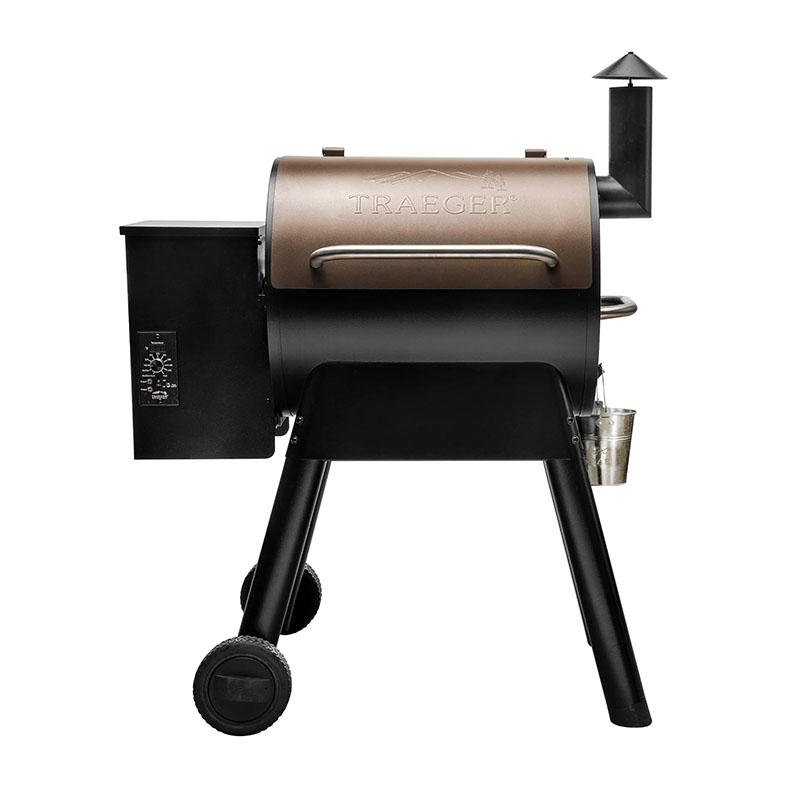
Limited Time Deal - Traeger Grills Pro 22
• Electric Wood Pellet
• Rating: 4.6 (1,795 ratings)
• 6-in-1 versatility to grill, smoke, bake, roast, braise, and BBQ food to juicy perfection
How a Traeger Pellet Grill Works
The mechanics are simple once you see them laid out.
The grill has a hopper — that rectangular box on the side — where you load your hardwood pellets. When you fire the grill up and set a temperature, an electric auger (essentially a motorized screw) feeds pellets from the hopper into a small fire pot at the base of the grill. The pellets ignite there. A convection fan circulates the heat and smoke throughout the cooking chamber, which is why pellet grills cook more evenly than most other setups — they behave like an outdoor convection oven that also happens to be making smoke.
The digital controller adjusts auger speed to regulate how many pellets are burning at any given moment, which is how it maintains temperature. Set it to 225°F and it holds 225°F. That's the whole trick, and it's a meaningful one when you're eight hours into a pork shoulder and you'd like to sleep.
The tradeoff compared to charcoal or offset smoking is that a pellet grill will never get you the aggressive, direct-heat char you get from live coals. The firebox is at the bottom under a heat deflector — you're cooking with indirect heat and convective smoke, not direct flame. That makes Traeger excellent for smoking, roasting, and low-and-slow work, and slightly less suited for searing a steak with grill marks. A lot of pellet grill owners keep a cast iron skillet or a gas burner nearby for the finishing sear on steaks for exactly this reason.
The Pellet Question: What's Safe and What Isn't
This comes up more than people expect, and it's worth answering directly.
Food-grade pellets and heating pellets are not the same product.
This is not a minor distinction.
Heating pellets — the kind sold for wood stoves and home heating systems — are made to burn efficiently and generate heat, nothing more. The wood used can include softwoods like pine, which produce unpleasant flavors and creosote-heavy smoke when used for cooking. More importantly, heating pellets can include fillers, binding agents, and compressed scrap materials from wood products like plywood or particleboard that contain adhesives and chemical treatments. None of that belongs anywhere near food.
Food-grade pellets — the kind you want — are made from 100% compressed hardwood sawdust, dried and compressed under heat and pressure with no chemical additives. The lignin in the wood itself acts as the natural binder. That's it. When they burn, they produce clean, flavorful smoke that carries the character of the wood into whatever you're cooking.
The rule is simple: if it doesn't say food-grade, BBQ, or cooking pellets on the bag, it doesn't go in your grill.
**What to look for:**
- 100% hardwood, no fillers or bark
- No binding agents or additives listed
- Marketed specifically as BBQ, cooking, or smoker pellets
- Under 0.5% ash content if listed (higher ash means lower quality wood or added filler)
Traeger sells their own pellets and they're quality. So are Pit Boss, Bear Mountain, Lumber Jack, and CookinPellets. Traeger will tell you that using non-Traeger pellets voids your warranty — that's largely a marketing position. Any food-grade pellet from a reputable brand that meets the standard 6mm diameter specification will work fine in a Traeger grill. Competition pitmasters routinely run third-party pellets in Traeger equipment without issue.
On storing pellets:
Moisture is the enemy. Pellets that absorb humidity swell, jam your auger, and burn poorly. Store open bags in an airtight container — a gamma seal bucket works well — in a cool, dry place. In humid climates, plan to use an open bag within thirty days.
Choosing Your Wood: Flavor Profiles That Actually Matter
Different wood species produce meaningfully different smoke character. This isn't marketing — you can taste the difference.
Hickory is the backbone of American BBQ smoke. Strong, savory, and slightly bacon-like. Works well with pork, beef, and chicken. Can overwhelm delicate proteins at high doses, so keep the cook time in mind.
Oak is the most versatile option. Medium-bodied smoke, slightly earthy, doesn't overpower. It's the default wood for Texas-style brisket and works with essentially everything. If you're unsure, start with oak.
Mesquite burns hot and produces an intense, bold smoke. Better suited to shorter cooks than low-and-slow twelve-hour sessions, where the intensity can accumulate into bitterness. Great for chicken quarters or beef ribs at higher temperatures.
Apple and cherry are the mild fruit woods — sweet, gentle smoke that complements pork, poultry, and even salmon. Cherry adds a slight color to the bark that looks good on ribs.
Pecan sits between hickory and the fruit woods: nutty, mild, slightly sweet. A good middle-ground option that pairs well with pork shoulders and whole birds.
Blended pellets exist for a reason — the competition community often prefers a hickory-oak blend for brisket, or cherry-hickory for ribs, because the combined profiles produce a more complex smoke than any single wood alone.
Temperature and the Logic of Low and Slow
If you're coming from gas grilling, the temperatures on a pellet grill require an adjustment in thinking.
Most pellet grill smoking happens between 180°F and 275°F. That range might look wrong if you're used to cranking a gas burner to 400°F and getting dinner done in twenty minutes. The trade is time for texture. Collagen in connective tissue — the stuff that makes cheap cuts tough — only breaks down into gelatin at low temperatures over long periods. That's where the tenderness in a great brisket flat or pulled pork shoulder comes from. You cannot rush it with high heat.
A few practical benchmarks:
180-200°F ("Smoke" setting) — Maximum smoke production, minimum heat. Use this for the first hour or two of a long cook to build a smoke ring and establish bark, then raise the temperature.
225-250°F — The workhorse range for low and slow. Brisket, pork shoulder, ribs. Expect roughly 1 to 1.5 hours per pound at 225°F, with significant variation depending on the specific cut and its fat content.
275°F — Faster cook time, slightly less smoke penetration. Useful when you're running behind on time without wanting to fully compromise the cook. A lot of experienced pitmasters finish their brisket at 275°F after wrapping.
325-375°F — Roasting range. Whole chicken, pork loin, vegetables. Good results with less time investment.
450-500°F (if your model reaches it) — Searing range. A preheated cast iron grate accessory helps here.
A wireless meat thermometer is not optional equipment. The Traeger's built-in probe is useful but a second thermometer at the grate level gives you a more accurate read on what the meat is actually experiencing. Internal temperature — not time — is how you know when something is done.
Smoking Brisket on a Traeger: The Method That Works
Brisket is the benchmark cook for any smoker, and the Traeger handles it well. This is a full packer brisket — both the point and the flat, untrimmed. If you're buying pre-trimmed brisket flats, the process is similar but the cook time is shorter.
What you need:
- 1 full packer brisket, 14-18 lbs, trimmed to roughly 1/4 inch fat cap
- Binder: yellow mustard or Worcestershire sauce
- Seasoning: coarse kosher salt and coarse black pepper (the classic 50/50 Texas rub), or Meat Church Holy Cow if you want a more complex bark
- Unwaxed butcher paper
- Wireless meat thermometer
- Oak or hickory pellets, or a blend of both
The cook:
Set your Traeger to 200°F and let it come to temperature and produce consistent smoke — about fifteen minutes. While it heats, apply your binder to the brisket and season generously on all sides. Fat side up goes on the upper rack if your model has one, which distances the meat from the heat deflector at the bottom.
Smoke at 200°F until the internal temperature of the thickest part of the flat reaches 165°F. This is when the stall will likely start — a frustrating plateau where the internal temp barely moves for hours as moisture evaporates from the surface and cools the meat. Do not panic. Do not crank the heat.
When you hit 165°F, raise the Traeger to 225-250°F and begin monitoring for the stall. Once you've been sitting at or near 165°F for an hour or more with no upward movement, that's your cue to wrap. Pull the brisket, wrap it tightly in two layers of unwaxed butcher paper (not foil — foil steams the bark into softness), and return it to the grill.
Continue cooking wrapped until the thickest part of the flat probes at 200-205°F and the probe slides in with no resistance — like pushing a skewer into soft butter. That's your actual doneness indicator. Temperature is a guideline; feel is the truth.
The rest: This is not optional. Rest the wrapped brisket for at least one hour, ideally two. The best approach is a cooler lined with towels, which holds temperature and lets the carry-over cooking finish the job and the juices redistribute. Competition cooks rest brisket for up to eight hours in a warming oven set to 140°F. The difference between a rested and an un-rested brisket is significant.
Slice only as much as you plan to serve immediately. Uncut brisket holds moisture far better than sliced.
A Note on the Grill Itself
The Traeger Pro 22 is the entry point that most people start with — sufficient cooking area for a full packer brisket or a rack of ribs alongside a chicken, reliable temperature control, and a price that doesn't require an extended conversation with your household budget. It's also the model that's been battle-tested by enough backyards over enough years that most potential quirks are well-documented.
The Traeger Pro 34 adds cooking surface and is worth the step up if you're regularly cooking for a crowd or running multiple proteins simultaneously.
Both run on the same fundamental system. The difference is square inches and hopper capacity, not cooking quality.
Frequently Asked Questions
Are wood pellets safe for cooking food?
Food-grade hardwood pellets are completely safe. They are made from 100% compressed hardwood sawdust with no chemical additives — the wood's own natural lignin acts as the binder. Heating pellets, sold for wood stoves, are not safe for cooking and should never be used in a grill or smoker. The distinction matters: heating pellets can contain softwoods, chemical binding agents, and compressed scrap wood from treated materials. Always buy pellets explicitly labeled as food-grade, BBQ, or cooking pellets.
Can you grill on a Traeger, or is it only for smoking?
You can grill, smoke, bake, roast, and braise on a Traeger — the brand markets it as a six-in-one cooker for good reason. The practical limitation is high-heat searing: because the fire pot sits below a heat deflector and you're cooking with indirect heat, you won't get the same intense direct-flame char you'd get from charcoal or gas at the same stated temperature. Most pellet grill owners who cook steaks frequently keep a separate searing option — cast iron, gas burner, or a charcoal chimney — for the finish.
How long do pellets last in the hopper?
At 225°F, a full hopper typically lasts six to eight hours depending on ambient temperature and wind. In cold weather, the grill works harder to maintain temperature and burns pellets faster. Keep an eye on the hopper level during long overnight cooks — running dry mid-smoke is something that happens once to every pellet grill owner and never again after that.
What's the best pellet for a beginner?
Oak or a hickory-oak blend. Oak is versatile enough to work with beef, pork, and poultry, produces clean smoke without intensity that overwhelms the food, and is forgiving if you're still calibrating your cook times. Once you're comfortable with the platform, branch out into fruit woods for pork and poultry, or try mesquite for shorter high-heat cooks.
Do I need to soak pellets before using them?
No. Pellets are designed to be used dry. Soaking them introduces moisture, which causes swelling, poor combustion, and potential auger jams. This is sometimes confused with the advice to soak wood chips for charcoal grilling — pellets and chips behave differently and the soaking step does not apply.
How do I clean a Traeger?
After every cook, empty the grease bucket (it fills faster than you expect and a grease fire is not the kind of smoke flavor anyone's going for). Every few cooks, vacuum ash from the fire pot and the inside of the cooking chamber. Every ten to fifteen cooks, do a deep clean of the grates, heat deflector, and drip tray. A grill that runs clean runs at accurate temperatures — ash buildup affects airflow and temperature consistency.
Can I use Traeger pellets in other pellet grills?
Yes. Food-grade pellets from any reputable brand will work in any pellet grill that uses standard 6mm diameter pellets, which is the category standard. The "use only our pellets" language in manufacturer documentation is primarily a warranty and quality control position, not a mechanical requirement. For more information please visit Traeger on Amazon.
STOP SCROLLING FOR WHERE TO GO. WE'LL TELL YOU.
The Pub Ring gets you into the bars and kitchens actually worth your time, plus a stamp card that turns showing up into something you get rewarded for. Join Free.

The Latest...
What Is Cleveland Style BBQ? Michael Symon’s Mabel’s BBQ, From a Regular
Cleveland style BBQ is a regional barbecue style created...

Great Lakes Christmas Ale 2026: The First Pour, a Guardians Win, and One Long Day on Market Avenue
Cleveland keeps its own calendar. The leaves are still...
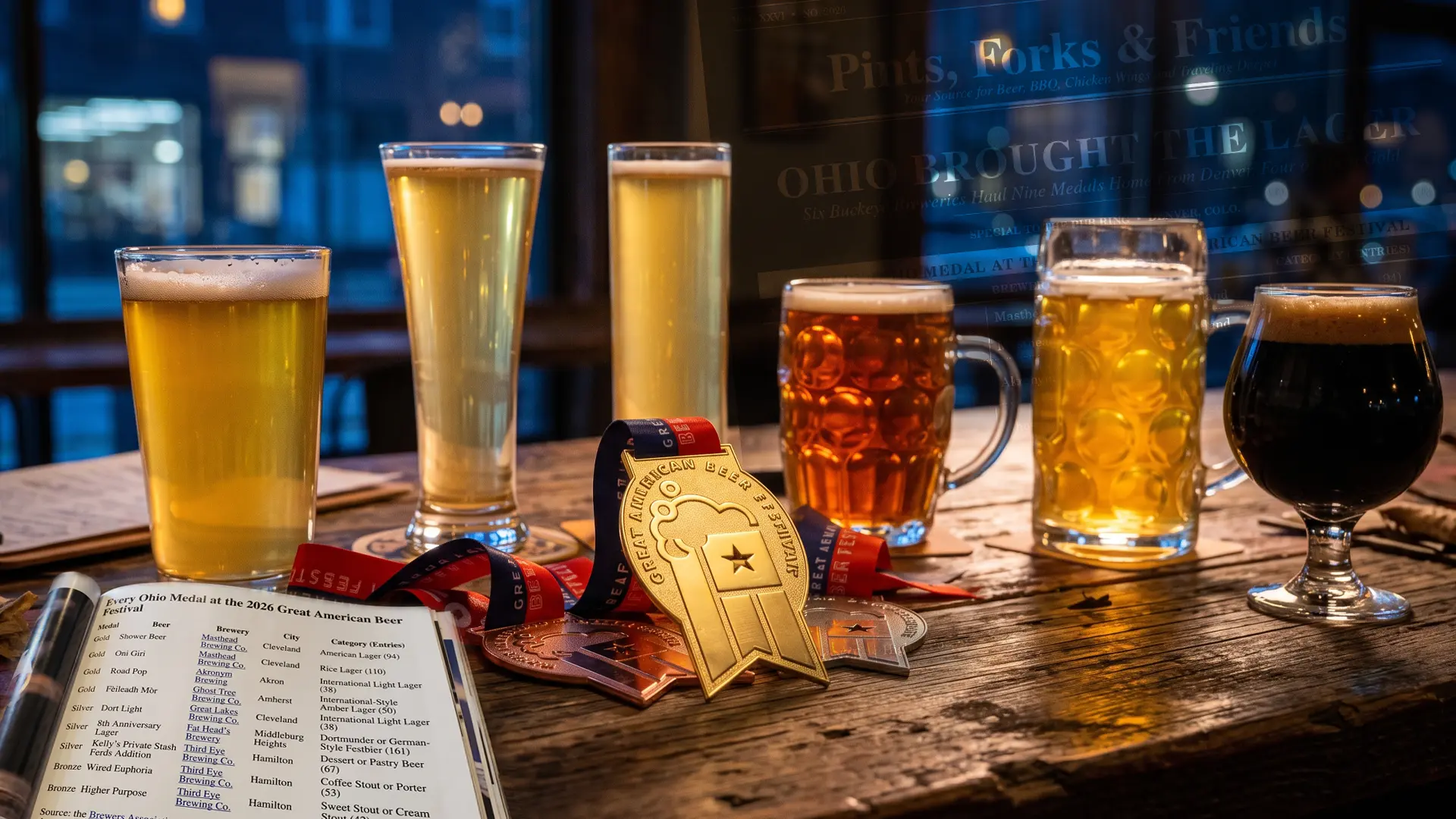
Ohio Brought Lager to an IPA Fight: The 2026 GABF Winners
The Great American Beer Festival moved outdoors this year,...